Nativity of the Lord (Christmas)
Also called Christmas Day (Episcopal Church; Church of England)C27, Nativity of Our Lord (Orthodox (OCA list) and Episcopal usage)C27.
What it celebrates
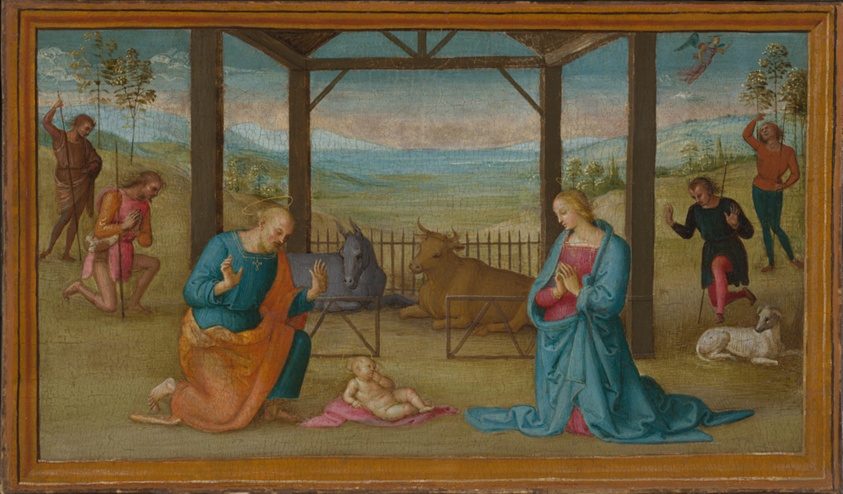
The Nativity of the Lord celebrates the birth of Jesus at Bethlehem, as the Orthodox Church in America tells it.C17 Tradition holds In the Roman Catholic calendar it opens Christmas Time, which begins with the evening of 24 December.C16 The Orthodox Church in America counts it among the Twelve Great Feasts.C7
Who observes it
| Tradition | Calendar | Rank, in its own terms | Scope | Dates |
|---|---|---|---|---|
| Catholic Roman CatholicC6,C35 | General Roman Calendar; USA text | Solemnity; Holyday of Obligation (USA) | Universal |
|
| Orthodox Eastern OrthodoxC7 | OCA list | one of the Twelve Great Feasts | Jurisdiction |
|
| Anglican Church of EnglandC5 | Common Worship Calendar (extract) | Rank not stated by the source | Provincial |
|
| Anglican Episcopal Church (USA)C9 | Not stated | Principal Feast | Provincial |
|
| Lutheran Lutheran (LCMS)C10,C36 | Not stated | Rank not stated by the source | Denomination |
|
| Protestant Methodist (UMC)C12 | Not stated | Rank not stated by the source | Denomination |
|
| Protestant Presbyterian (PC(USA))C13 | Not stated | Rank not stated by the source | Denomination |
|
- Roman Catholic (General Roman Calendar, USA text): Solemnity and Holyday of Obligation; its Vigil Mass is said on the evening of 24 December.C6,C16
- Eastern Orthodox (OCA list): one of the Twelve Great Feasts; Menaion (fixed church calendar) date 25 December; civil 25 December (Revised Julian), 7 January (Julian).C7,C3,C4
- Episcopal Church (USA): Principal Feast. A Church of England collects page calls it a Principal Feast.C9,C8
- Lutheran: LCMS keeps the Festival of the Nativity of our Lord, in white.C10
- Methodist (UMC) and Presbyterian (PC(USA)) calendars include the Nativity; an ELCA page and a Patheos overview of Baptist practice mention Christmas.C12,C13,C11,C14
- Dates: 25 December in the US Roman Catholic, Episcopal and Church of England calendars; 25 December on the Julian calendar is 7 January 2027 on the civil calendar.C35,C1,C2,C5,C4
Historical customs
Sources differ on the earliest evidence for 25 December.C18 The OCA says Clement of Alexandria indicates the date and Hippolytus mentions the feast.C30 The Catholic Encyclopedia (1908) says Clement reported Egyptian calculations placing the birth on 20 May and calls the birth date in the Hippolytus passage an interpolation; it says the earliest Roman evidence is the calendar of 354 and that the feast was kept at Rome before 354.C31,C33,C34 The OCA adds that the feast was kept together with Epiphany for the first four centuries.C19 The Catholic Encyclopedia says Francis of Assisi originated the crib of today in 1223.C21
Modern customs
A Church of England guide lists Midnight Mass (a Holy Communion service) on Christmas Eve, Nine Lessons and Carols, Christingle and crib services.C22 The OCA text describes a forty-day fast beforehand and, on the eve, the Royal Hours and Vespers with the Liturgy of St Basil, then Great Compline.C23,C24 It says that during the rejoicing, which extends to Epiphany, fasting and kneeling are not called for.C25
Tradition holds
The label "Tradition holds" marks a statement that rests on what a tradition reports: a legend, a miracle or a disputed point. The label is not a judgment that the statement is false.
- Jesus was born at Bethlehem (shepherds, a census, Magi), as the Orthodox Church in America tells itC17 Reported by: Lives of all saints commemorated on a given date (pattern /saints/all-lives/YYYY/MM/DD) — Orthodox Church in America, live (25 Dec)
Sources
Each note number in the text (for example C1) leads to the sources behind that statement.
- C1
- Liturgical Calendar for the Dioceses of the United States of America, 2027 PDF (linked from RC-USCCB) — United States Conference of Catholic Bishops, 2027 (copyright 2025)
- C2
- Liturgical Calendar for the Dioceses of the United States of America, 2026 PDF — USCCB (linked from RC-USCCB), 2026
- Liturgical Calendar for the Dioceses of the United States of America, 2028 PDF (linked from RC-USCCB) — United States Conference of Catholic Bishops, 2028
- C3
- Lives of all saints commemorated on a given date (pattern /saints/all-lives/YYYY/MM/DD) — Orthodox Church in America, live (25 Dec)
- D. Oliver Herbel, "Scheduling an Eastern Orthodox Christmas", OUPblog, 7 Jan 2014 — Oxford University Press (OUPblog), 7 Jan 2014
- C4
- D. Oliver Herbel, "Scheduling an Eastern Orthodox Christmas", OUPblog, 7 Jan 2014 — Oxford University Press (OUPblog), 7 Jan 2014
- News release on the Nativity night service, 7 January 2025 — Department for External Church Relations, Russian Orthodox Church (mospat.ru), 7 Jan 2025
- C5
- Calendar of the Church Year (as hosted on BCP Online) — Episcopal Church (Book of Common Prayer 1979, as reproduced), 1979 text
- Common Worship Calendar (extract: seasons, holy days, commemorations, Easter dates 2001-2035) — Church of England, Archbishops' Council / Church House Publishing, 2000
- C6
- Liturgical Calendar for the Dioceses of the United States of America, 2027 PDF (linked from RC-USCCB) — United States Conference of Catholic Bishops, 2027 (copyright 2025)
- Universal Norms on the Liturgical Year and the General Roman Calendar (ranks, precedence table para 59, particular calendars paras 48-58) — Holy See; hosted by the Liturgy Office of the Catholic Bishops' Conference of England and Wales, 1969 text, English translation as hosted (para 59)
- C7
- Feasts of the Church Year: the Twelve Great Feasts list — Orthodox Church in America, live
- C8
- Common Worship collects and post-communions, Christmas season — Church of England, Archbishops' Council (page title not shown in the extract; copyright notice names Common Worship), current page
- C9
- Calendar of the Church Year (as hosted on BCP Online) — Episcopal Church (Book of Common Prayer 1979, as reproduced), 1979 text
- C10
- Christmas Day event page (2024 instance; page copyright 2026) — Lutheran Church-Missouri Synod, current
- C11
- Church Year Observances / lectionary page — Evangelical Lutheran Church in America, 2025-26
- C12
- "The Calendar" (Christian year, lectionary calendar) — Discipleship Ministries, United Methodist Church
- C13
- The Church Calendar — Presbyterian Church (U.S.A.)
- "The Christian Year Excerpt" from Companion to the Book of Common Worship — Geneva Press, hosted by PC(USA), 2003
- C14
- "Sacred Time" (Baptist) — Patheos Library
- C16
- Universal Norms on the Liturgical Year and the General Roman Calendar (ranks, precedence table para 59, particular calendars paras 48-58) — Holy See; hosted by the Liturgy Office of the Catholic Bishops' Conference of England and Wales, 1969 text, English translation as hosted (paras 32-34)
- C17
- Lives of all saints commemorated on a given date (pattern /saints/all-lives/YYYY/MM/DD) — Orthodox Church in America, live (25 Dec)
- C18
- Lives of all saints commemorated on a given date (pattern /saints/all-lives/YYYY/MM/DD) — Orthodox Church in America, live (25 Dec)
- Catholic Encyclopedia, "Christmas" (C. C. Martindale), Vol. 3 — New Advent, 1908
- C19
- The Orthodox Faith, Volume II (Worship), "Nativity of Christ" (same series as OCA-PENT) — Orthodox Church in America, current page
- C21
- Catholic Encyclopedia, "Christmas" (C. C. Martindale), Vol. 3 — New Advent, 1908
- C22
- "Your church at Christmas" — Church of England, current page
- C23
- The Orthodox Faith, Volume II (Worship), "Nativity of Christ" (same series as OCA-PENT) — Orthodox Church in America, current page
- C24
- The Orthodox Faith, Volume II (Worship), "Nativity of Christ" (same series as OCA-PENT) — Orthodox Church in America, current page
- C25
- The Orthodox Faith, Volume II (Worship), "Nativity of Christ" (same series as OCA-PENT) — Orthodox Church in America, current page
- C27
- Liturgical Calendar for the Dioceses of the United States of America, 2027 PDF (linked from RC-USCCB) — United States Conference of Catholic Bishops, 2027 (copyright 2025)
- Calendar of the Church Year (as hosted on BCP Online) — Episcopal Church (Book of Common Prayer 1979, as reproduced), 1979 text
- Common Worship Calendar (extract: seasons, holy days, commemorations, Easter dates 2001-2035) — Church of England, Archbishops' Council / Church House Publishing, 2000
- Feasts of the Church Year: the Twelve Great Feasts list — Orthodox Church in America, live
- The Orthodox Faith, Volume II (Worship), "Nativity of Christ" (same series as OCA-PENT) — Orthodox Church in America, current page
- Christmas Day event page (2024 instance; page copyright 2026) — Lutheran Church-Missouri Synod, current
- C30
- Lives of all saints commemorated on a given date (pattern /saints/all-lives/YYYY/MM/DD) — Orthodox Church in America, live (25 Dec)
- C31
- Catholic Encyclopedia, "Christmas" (C. C. Martindale), Vol. 3 — New Advent, 1908
- C33
- Catholic Encyclopedia, "Christmas" (C. C. Martindale), Vol. 3 — New Advent, 1908
- C34
- Catholic Encyclopedia, "Christmas" (C. C. Martindale), Vol. 3 — New Advent, 1908
- C35
- Liturgical Calendar for the Dioceses of the United States of America, 2026 PDF — USCCB (linked from RC-USCCB), 2026
- C36
- LCMS events calendar, December 2026 (iCal month feed) — Lutheran Church-Missouri Synod, December 2026